On Suffering, Adversity, and The Power of Bearing Our Burden
Mar 04, 2026
There are many forms of suffering we encounter in life; some are natural, some are voluntary, some are avoidable, and some are intentional. We can refine our quality of life and serve a higher purpose with a better understanding of suffering, bearing our burden, and intentional inner struggle.
Natural Suffering
As humans who consume living organisms, we must accept that there is a natural cost to our survival. We eat living things, and we (mistakenly) believe we are at the apex of the food chain. Consequently, a certain level of suffering is an intrinsic and unavoidable aspect of life on Earth; we must take a life to sustain our own. This reality makes suffering an endemic and necessary part of existence.
I once had a dream in which a Being came to me as I was grilling sausage links. Oddly, I was heating them over a wood stove which was by a manhole. As if in a cartoon, the sausages slipped off my big grilling fork into a hole in the manhole cover. I pulled back the cover to retrieve the sausages and saw a feeding frenzy of reptilian creatures fighting over the sausages. They slithered and gnawed. It was extremely frightening when suddenly one saw me and tried to jump up to get me. I quickly covered the manhole, gasping for breath and heart pounding. The Being who loomed over me said, “Now you see what you humans look like to us.”
I will never forget the dream. It illustrated something for me about our human nature. We certainly do not see ourselves as reptiles in a feeding frenzy, but our actions show no regard for the delicate balance and interdependence of life on the planet.
Voluntary Suffering
Voluntary suffering involves a sacrifice made with the expectation of some resulting benefit or gain. This can manifest in various ways, such as pursuing an education, dedicating time to practicing a skill, or participating in a community cleanup project. Working toward any desired objective inherently demands a price—be it time, effort, or money. We accept this cost willingly, viewing it not as genuine suffering, but rather as a necessary payment to achieve a personal goal. While this type of suffering is tied to everyday life and remains rooted in self-interest, it is nevertheless accepted as an essential component of human existence and progress, both individually and collectively.
Avoidable Suffering
This is the realm of suffering due to our own egoism. It is the misery we encounter daily in the form of attachment. It is our anxiety and anger. It is all a result of having our will sublimated to the ego. We identify with our thoughts which form the plethora of negative emotions, limiting beliefs, and depression. When the ego runs the show, it creates a heap of avoidable suffering.
How can we avoid it?
The only way to see avoidable suffering for what it truly is is through dedicated inner work. If we continue to believe this suffering is an inevitable and necessary part of life that we simply must endure, we will remain hopelessly trapped within it. However, we have the power to avoid this type of suffering by engaging in an intentional struggle. If we fail to apply our own conscious effort to address the suffering we experience, it will persist as a major obstacle on our path. Essentially, if we do not introduce our own intentional suffering into the process of life—meaning, the effort of intentional inner work—life will inflict suffering upon us in other, perhaps more painful, ways.
Intentional Suffering
Intentional suffering comes from a higher purpose; one which goes against the ordinary stream of life. It is not for our own gain, yet we work within the confines of our regular life experiences to produce a more refined energy. We remain within the laws of existence and work to be present with the yes and no of our inner struggle. If we take this on consciously and intentionally, we contribute to things even greater than our own transformation. We feed something higher. We are better able to bear the unpleasant manifestations of others. We strive to expand our awareness to embrace a more objective outlook of ourselves.
Intentional suffering has a deeper meaning and strengthens our inner process in a way that the other kinds of suffering do not. The epitome of this kind of suffering is represented by Jesus, Buddha, Mohammed, and other prophets whose life examples show us the way. So much of religious dogma, however, has distorted the flavor of this suffering.
Adversity
In light of this, where do we land regarding adversity?
Life inevitably brings misfortune in various forms; it is an inherent aspect of our existence on Earth. What dictates the extent and nature of our suffering, however, is how we respond to this adversity. Much of the avoidable suffering that comes hand in hand with our difficulties provides us with ample opportunity for transformation.
If we embrace intentional suffering in these times, we gain the strength to bear the burden of the situation. This intentional effort to not become crushed by the difficulty provides such strength of Being. We may want to wallow in self-pity or fuel the fear by constant thoughts of what might happen, but our struggle to observe such attachments eventually gives us the power to choose not to do this.
This is the process of transformation that leads to freedom from the attachments.
In this way, adversity becomes a key vehicle for practicing intentional suffering. The more we practice abiding with the negative emotions, the more we accept our difficulties, and are able to bear the situation.
“When a man finds that it is his destiny to suffer, he will have to accept his suffering as his task; his single and unique task. He will have to acknowledge the fact that even in suffering he is unique and alone in the universe. No one can relieve him of his suffering or suffer in his place. His unique opportunity lies in the way in which he bears his burden." – Victor Frankl from Man’s Search For Meaning
As a prisoner of war, he very much understood the reality of this statement. This kept him from despair even when there seemed to be no hope of getting out alive. This ability to bear the situation kept him alive, unlike so many of his fellow prisoners, who died quickly once they gave up.
“Once the meaning of suffering had been revealed to us, we refused to minimize or alleviate the camp's tortures by ignoring them or harboring false illusions and entertaining artificial optimism. Suffering had become a task on which we did not want to turn our backs.”
These extreme conditions allowed him to understand the power of bearing suffering; however, we can also learn from lesser degrees of suffering found in our everyday lives.
I have seen countless people, including myself, who have emerged from adversity only to be stronger, clearer and able to understand the transformation that has occurred because of the difficulty. Without the misfortunes, we would not be the same people. Our perspective has greatly changed and we are able to bear more through choice rather than being victims of fate.
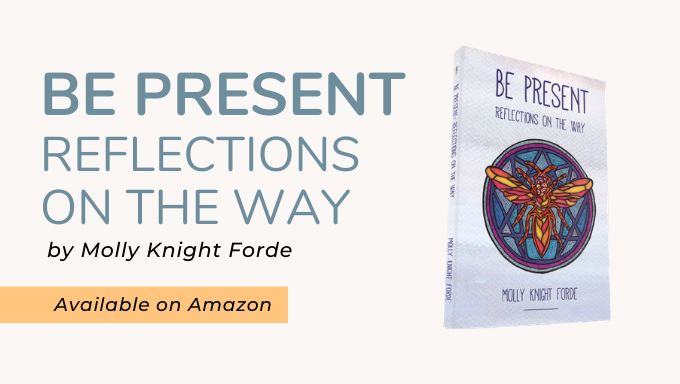
Molly Knight Forde is the founder of the Awareness School and author of Be Present: Reflections On The Way.
If you are interested in experiencing a shift in how you see things, what you believe, and what you think you know, consider taking our 3-week meditation course: 21 Day Meditation.
Seeking a spiritual community?
You can become a member of the Awareness School anytime. Click here for more information: https://www.awarenessschool.com/memberships
FREE LIGHT GRID MEDITATION
Receive a free Light Grid Meditation and sign up for our weekly email, which delivers our latest blog post, Awareness School news and shamanic wisdom to your inbox every Thursday.
We will never spam you or sell your email address